Part 03: what happened in human studies
What does Thymosin Alpha-1 research show?
Some groups seemed to improve. The strongest severe-infection study found no help, so the answer depends on who was treated.
Do human studies show that it works?
Not for every use. The human studies give mixed answers. Some liver studies found help. The biggest severe-infection study found none.
Thymosin Alpha-1 may rouse weak defenses. It may also calm defenses that attack too hard. Tests on cells support both actions. That explains why doctors tried it for COVID-19 and other illnesses.
Lab results don't prove that patients get healthier.
Many human studies were small or done in one region. Bigger, fairer studies give you more trust. The results below name who was treated and what changed.
A result applies first to that study group. Your illness, age, and care may differ.
You can keep hope without calling it proof.
You can't make a lab idea into your promised result.
What is the Thymosin alpha-1 peptide made from?
Natural Thymosin alpha-1 is a 28-amino-acid chain. These small parts also build proteins [1]. Your body starts with a longer 113-amino-acid protein [1]. It then cuts this shorter chain free.
One end carries a small added piece. The added end piece keeps the peptide working. Thymalfasin is a lab-made copy with the same parts in the same order [4].
Goldstein's team mapped that order in 1977 [1]. Older people often have lower natural amounts. Some long-term illnesses show this too.
A lower amount doesn't prove that adding more will help.
The chain tells a lab what it made. Only a human trial can tell you whether patients got healthier.
You won't learn your outcome from the chain alone.
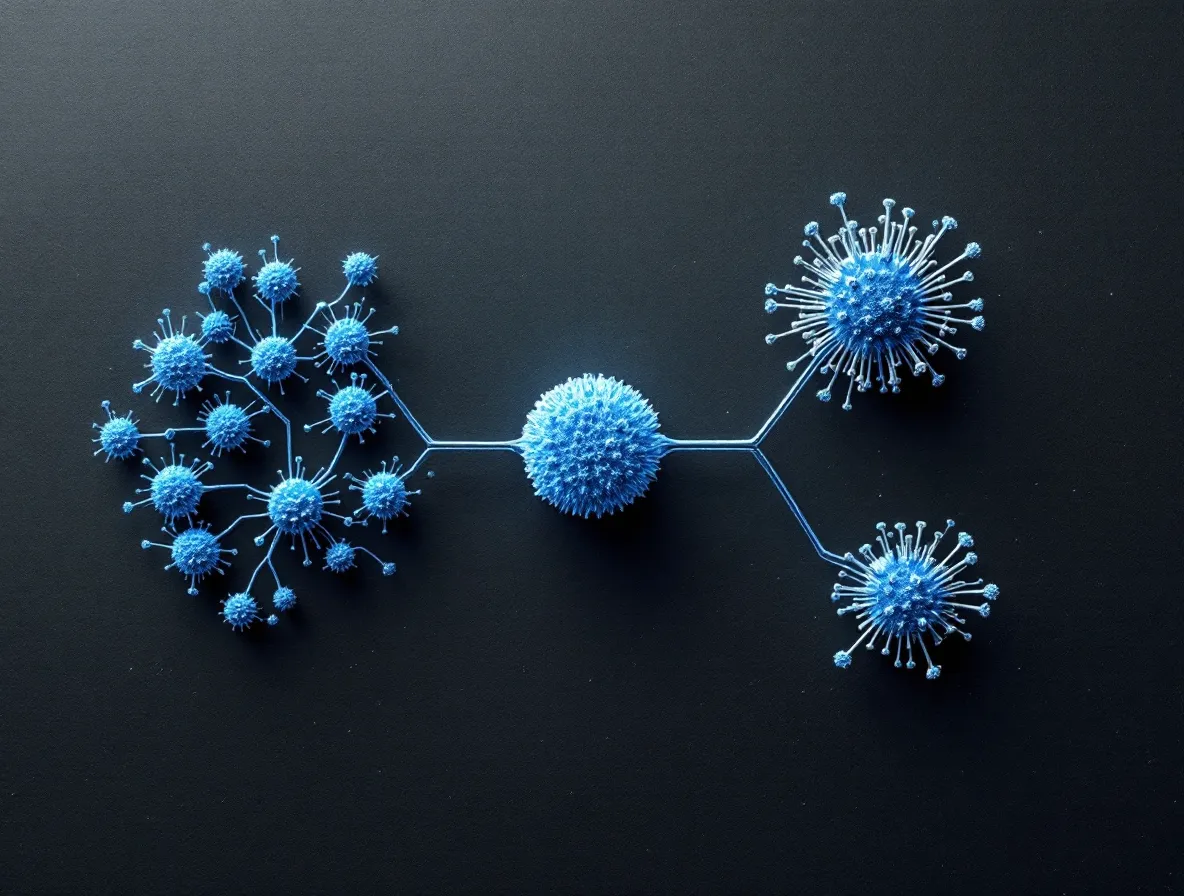
How does the Thymosin alpha 1 peptide guide defenses?
The Thymosin alpha 1 peptide works with cells that spot danger. Those cells find signs of germs. A protein called interleukin 12 helps send that fight message. The danger-spotting cells then show the threat to T-cells [5]. T-cells help your body fight.
The peptide may also call in a calming step. A protein called interleukin 10 helps stop your defenses from running too hard [5].
Its work may go in two directions.
The peptide may wake weak defenses or cool harsh ones. Which action matters can change with the illness. You may not feel either cell change.
Only a fair human study can show better health.
You need a patient result before you can claim help.
Do Ta1 peptide and thymalfasin mean the same thing?
Yes. Ta1 peptide and thymalfasin are names for Thymosin Alpha-1 [1][4]. Thymosin Alpha-1 is the natural name. Thymalfasin is the lab-made drug name.
A review tracked cell signs called PD-1 and Tim-3. These are lab labels for strain on T-cells, not feelings a person can notice [6]. Other defense cells may also attack sick cells.
Those blood changes don't prove that patients felt better.
Thymosin Alpha-1 reaches several kinds of cells. Its effects may change with the illness. Help in one group can't promise help in yours.
Start with who got the peptide. Then ask what changed for those people.
You can't read a blood label as your health result.
Why did the sepsis studies give different answers?
Sepsis is a deadly illness. The body's fight against infection starts harming its organs. The larger Thymosin Alpha-1 study gives the firmer answer. Thymosin Alpha-1 still gave no clear help there.
It was a phase 3 trial, a late test meant to confirm whether a drug helps. It included 1,106 adults at 22 centers. Staff gave the shots every 12 hours for 7 days.
At the 28-day mark, death rates were alike. Researchers tried to reach 95% certainty that the gap was real. Their math still allowed equal death rates [3].
The study used a placebo, a look-alike treatment with no peptide. Patients and staff weren't told who received the placebo or the peptide. Those steps kept hope from bending the answer.
The earlier study followed 361 patients. Staff gave the shots every 12 hours for 5 days. For 2 more days, staff gave one daily shot.
At its 28-day mark, about 9 more people in each hundred were alive with the peptide. Chance still could have caused that difference [2].
Two small studies also looked hopeful. One 56-patient study found 78% lived in one group and 60% in the other [13][14]. Small groups can give shaky answers.
Sepsis can change from hour to hour. Fair groups and hidden treatment names help keep the test fair.
For your decision, the large fair test carries more weight.
You can base your view on the fairest test.
What did Thymosin alpha 1 covid studies find?
One team looked back at 76 severe COVID-19 cases. Fewer people died in the Thymosin Alpha-1 group [6]. A second COVID-19 finding came from blood tests. The tests found fewer cell-strain labels called PD-1 and Tim-3. Those labels don't show that a person felt better. Older patients seemed to show the clearest change.
The team had not used chance to choose each person’s care. Other differences between the groups may have caused the result.
A later review covered about 5,300 patients. Across those cases, reviewers couldn't confirm that Thymosin Alpha-1 saved lives.
A blood-test change may look hopeful. Patients living longer is the result that matters.
Looking back can find a possible link. A fair new trial must test whether the drug caused it.
You won't know your outcome from an old record review.
Where have liver studies found the most help?
Long-term viral liver illness has the deepest study record. The studies still don't agree.
One trial followed 552 people with hepatitis C, a long-lasting liver infection. Their earlier drug care hadn't worked. Adding Thymosin Alpha-1 didn't help the whole group.
Among people who stayed for all 48 weeks, more had no virus found in their blood [8]. That result is less firm because it leaves out those who stopped.
Another 51-patient Thymosin Alpha-1 study covered hepatitis B. Adding the peptide didn't beat the other drug alone [11]. Side effects were much alike.
The studies suggest possible help beside other care. They don't prove the peptide works alone.
People who stop a study may be sicker. That's why the result for everyone matters most.
You can't ignore people who left when you judge the result.
What is thymalfasin, and where is it approved?
Thymalfasin is the lab-made form of Thymosin Alpha-1. It matches the natural peptide part for part [4]. Its drug guide describes shots under the skin. Soreness near the needle was the main complaint [4].
About 35 countries have approved thymalfasin. Their approved products face drug checks. A Thymosin Alpha-1 research vial isn't equal.
Cancer studies added thymalfasin to standard care [7]. They included skin, liver, and lung cancers. The drug wasn't used as a cure by itself.
Foreign approval doesn't create a US approval. It also doesn't prove an online vial matches the drug.
Keep those products apart when you weigh a claim.
You must keep your online vial apart from that drug.
How do Thymosin alpha 1 and thymosin beta 4 differ?
The names sound close, but their jobs differ. Thymosin Alpha-1 is a 28-amino-acid peptide. It comes from a larger protein and works with defense cells [1][5].
Thymosin beta-4, also called TB-500, is a 43-amino-acid peptide. It works with a protein that helps cells keep their shape and move. Researchers study it for tissue repair.
International sports officials ban thymosin beta-4 from competition. That ban doesn't name Thymosin Alpha-1. Thymosin Alpha-1 has a different job.
A seller may blur the names. You don't have to.
Check the full name before you weigh any proof.
You won't confuse the proof if you check your name first.